

Most engineering firms we speak to have built their business on referrals, repeat orders, and trade relationships. That’s worked for years. The problem is that referrals plateau, repeat customers eventually consolidate suppliers, and the next generation of procurement managers tend to open Google before picking up the phone.
If your engineering company is growing slower than it should, or if your enquiries have gone quiet over the last 18 months, there’s a good chance your buyers are looking online and you’re not there. SEO for engineering companies is how you fix that. Done properly, it brings the right people to your website at the moment they’re actively looking for what you do.
This isn’t a “what is SEO” article, there’s enough of those. This is what SEO for engineering firms actually looks like in practice, what to focus on, and what’s worth your time.
If you want the full engineering marketing picture, check out our engineering marketing strategy guide.
Why engineering companies need SEO more than most industries
Engineering buyers research before they enquire. The average B2B purchase involves 13 stakeholders, and an engineer specifying a part or a service is rarely the only one signing it off. By the time anyone picks up the phone or sends an enquiry, your prospects have already shortlisted suppliers based on what they could find online.
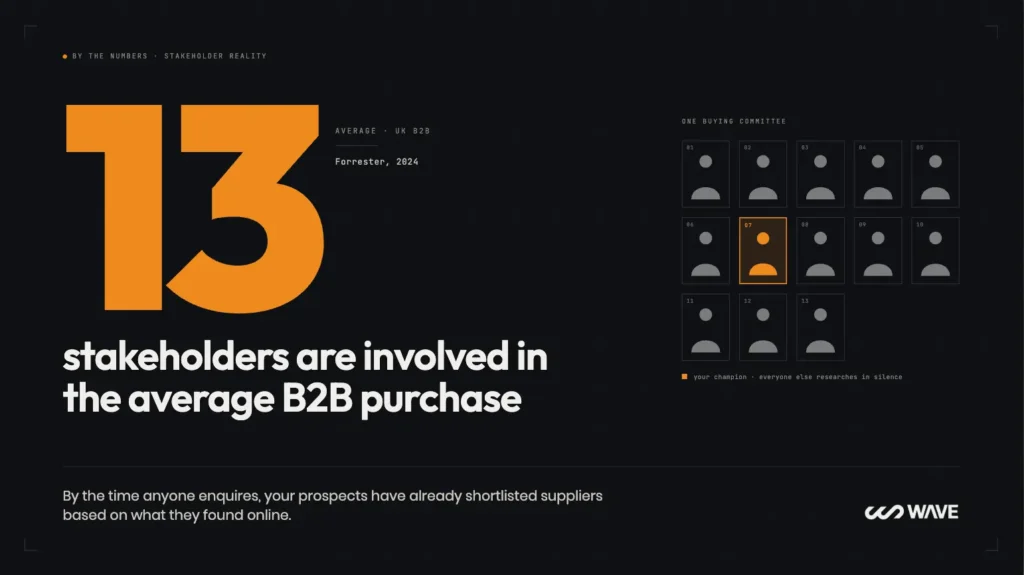
If you’re not in that shortlist, it doesn’t matter how good your engineering is. You’re not in the conversation.
There’s another reason engineering is a strong fit for SEO. The search terms your buyers use are highly specific – material specifications, tolerances, processes, certifications, industries served. That specificity is gold. A search like “ISO 9001 CNC machining Birmingham” or “stainless steel pressure vessel manufacturer UK” comes from someone who knows exactly what they need. Even if the amount of searches for these terms is low, if you rank for them you’re not getting tyre-kickers. You’re getting buyers.
What’s different about SEO for engineering websites
Most generic SEO advice doesn’t translate cleanly to engineering. Here’s what actually matters when you’re optimising an engineering website:
Service pages do the heavy lifting
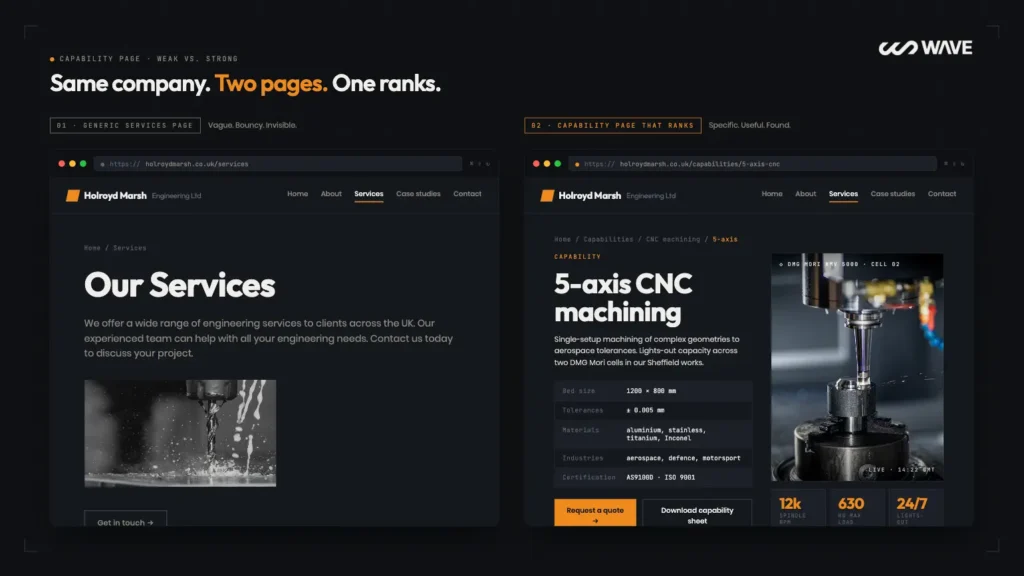
For a B2C site, the homepage and category pages get the traffic. For an engineering company, it’s your capability pages – pages dedicated to a specific process, product, or service you offer. These are what buyers search for, and they’re usually where engineering websites are weakest.
Most engineering sites we audit have one bloated “services” page listing everything. That’s a missed opportunity. Each capability deserves its own page, properly titled, with clear technical detail, the industries you serve with it, and the kit you run.
Technical depth beats word count
Engineering buyers can spot waffle. If your page about waterjet cutting reads like it was written by someone who’s never seen one, you’ll lose them in seconds. Real specifics – bed sizes, tolerances, materials handled, typical lead times – do two jobs at once. They convince the buyer you know what you’re doing, and they give Google something specific to rank you for.
You don’t need to write 3,000 words. You need 600 to 900 words that an engineer reading them would nod at.
Schema markup matters more here than most agencies realise
Product schema, organisation schema, and FAQ schema all help engineering pages stand out in search results. Few competitors in the engineering sector implement them properly. It’s a small technical job that punches above its weight.
Your PDFs are probably your best content, sitting in the wrong place
Most engineering firms have years of datasheets, case studies, and technical documents buried in PDFs no one can find. That content is often more useful than anything on the public site. Either turn the best of it into proper web pages, or at minimum optimise the PDFs themselves with sensible filenames, alt-tagged images, and links from relevant capability pages.
Where to focus your SEO effort
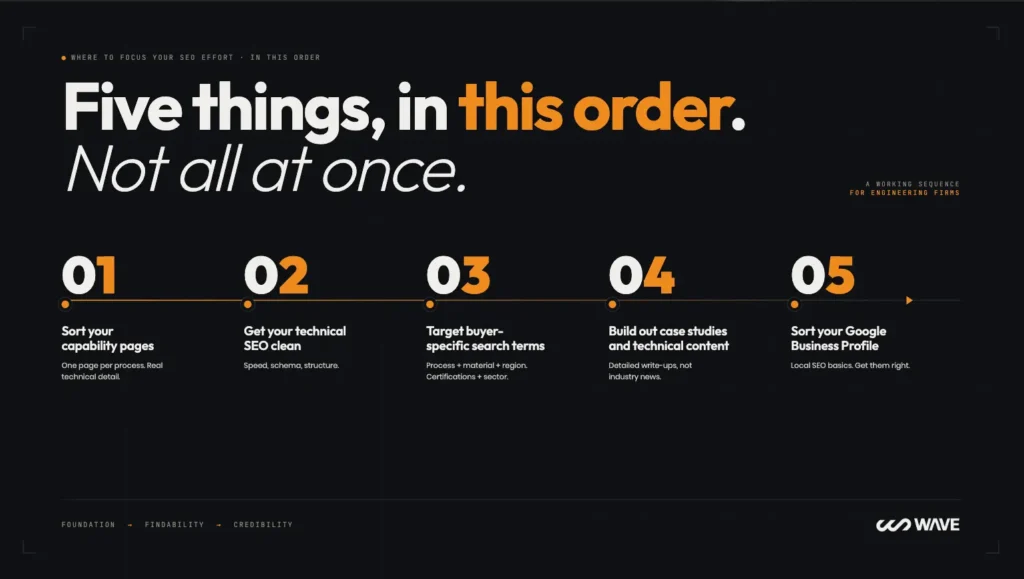
If we were starting from scratch with an engineering company tomorrow, here’s the order we’d work in.
1. Sort your product/service pages first. One page per process, product, or service. Clear titles. Real technical detail. Industries you serve. Photos of actual work, not stock images.
2. Get your technical SEO clean. Site speed, mobile usability, proper heading structure, schema markup, internal linking from capabilities to case studies and back. None of this is glamorous, but it’s the foundation.
3. Target buyer-specific search terms. Forget “engineering company UK”. Go after the specific things buyers actually search: process + material + region, certifications + sector, problem + solution. These have lower volume but the intent is buying intent.
4. Build out case studies and technical content. Not blog posts about industry news. Detailed write-ups of jobs you’ve done, problems you’ve solved, and questions buyers ask. Each one becomes a page that ranks for something specific and proves you can do the work.
5. Sort your Google Business Profile and a few key directories. For engineering firms with a physical site, local SEO still matters. Get the basics right.
Common SEO mistakes engineering firms make
A few patterns we see again and again:
- Treating the website as a brochure. It’s a sales tool. If your site exists to confirm you’re real after a referral, it’s costing you the enquiries you don’t know you’re missing.
- Hiring a generalist SEO agency. Most agencies won’t bother understanding the difference between a fabrication shop and a precision machinist. You’ll get generic blog posts and confused recommendations.
- Writing for Google instead of buyers. Keyword stuffing reads as obviously to procurement managers as it does to search engines. Don’t do it.
- Giving up after three months. SEO for engineering takes time. You’re competing in a niche where every competitor has been around for 30 years. Six to twelve months of consistent work is realistic before you see proper results.
Doing it yourself versus hiring an agency
For very small engineering firms with the time and inclination, the basics of SEO are learnable. Sort your capability pages, install Yoast or RankMath, get your Google Business Profile set up, and start writing case studies. You’ll make progress.
For most engineering companies, though, the maths doesn’t work. SEO is a skill that takes years to develop, and the time you’d spend learning it is time not spent running the business. An SEO marketing agency for engineering that knows the sector will move faster, avoid the dead ends, and get you ranking for terms that actually generate enquiries.
The key is finding one that understands engineering. A generalist SEO agency will treat you like a plumber with a website. The strategies, the keyword research, the content priorities are different in this sector, and getting that wrong wastes 12 months.
Where Wave fits in
We’re a UK B2B digital marketing agency that works almost exclusively with engineering, manufacturing, and industrial companies. We’ve spent years getting to know how engineering buyers search, what makes a capability page actually rank, and how to turn an engineering website into a proper source of enquiries.
If you’re an engineering company who knows your website should be doing more, we offer a free SEO audit. We’ll tell you what’s working, what’s not, and what would move the needle. No obligation, no sales pitch, just a useful conversation.
Get in touch if that sounds useful.