If you’re like many of the businesses we work with, you’ve probably noticed a shift in the manufacturing marketing landscape lately:
- Competitors with nice websites and social media pages seem to be doing better than they did before
- Fewer leads are coming from trade shows while costs remain high
- Customers seem to know a hell of a lot more about your product before anybody at the business even speaks to them
It all points to the same thing: manufacturing buyers are shifting towards digital channels to do their research and choose a supplier before chatting to you at a trade show. To maximise revenue in today’s digital-first world, you need a b2b manufacturing marketing strategy that combines the reach of digital channels with the in-person relationship building done at trade shows.
This article is designed to help you build exactly that.
Here’s what we cover:
- What makes marketing strategies for manufacturers different from other industries
- Why traditional marketing isn’t enough on its own
- Digital marketing strategies that actually work for manufacturers
- How to put your manufacturer marketing strategy together and the mistakes to avoid
- Your options if you want to outsource your marketing (in-house vs. agency)
- Frequently asked questions about manufacturing marketing strategies

What makes marketing strategies different for manufacturers
Sales cycles are longer
Manufacturing purchases are high-ticket, and client lifetime value is significant. Buyers are often looking for a reliable supplier to give lots of repeat business to, meaning the decision of who to buy from takes longer. Buying cycles also involve significantly more independent research, with an average of 11 pieces of content consumed before talking to anyone (Sopro).
Multiple decision-makers
According to Forrester, the average B2B purchase involves 13 stakeholders; conversations between engineering, finance, procurement, operations, and more will be taking place behind the scenes in any direct sales process between you and your prospects. If you are to market your products and services effectively, you will need to ensure that any marketing material – from the website to the social media content – contains information that is relevant to every decision maker who might see it. For example, cost-first messaging would appeal to the finance department, technical content will appeal to engineering, outcome-based and efficiency benefits will draw in operations.
Technical buyers
Someone with expert technical knowledge of the product will be involved in every sales process. As a consequence, lazy and generic marketing will stick out like a sore thumb. You need content that is both convincing and engaging for the experts to read. This requires both technical knowledge and writing skills to create.

B2B marketing principles apply
Most manufacturing buyers are other businesses. This has important implications for your messaging as selling to businesses revolves less around personal benefits and more about ROI, reliability, and the reduced long-term risk of partnering with you.
We’ll cover how these important differences translate into our strategy later.
Why traditional manufacturing marketing isn’t enough anymore
The old channels are in decline
For manufacturers looking to modernise their marketing strategy, understanding why the old channels are declining is the essential first step.
Trade shows show a worse ROI
If you’re like many of our clients and partners, you’ll have noticed a steady decline in returns from trade shows, while the costs have remained high or increased. This is because of a rise in digital-first buyers who overwhelmingly prefer to research, enquire and make purchases through digital channels rather than via handshakes.

Print advertising is less effective
Print advertising has faced massive issues with inefficiency when competing with the internet – why wait for a newsletter or magazine when information is available instantly via Google and ChatGPT? While there may be some old-timers who like a good printed brochure, most of your prospects will be just as happy receiving it – as your wallet will be for sending it – as a PDF.
Referral is unpredictable
Referral is fantastic. It’s easy — you build trust immediately, and the sales cycles are much quicker. But you can’t plan a scaling business around them, and when times get tough, they dry up quickly. Digital marketing casts your net much wider, ensuring that you’re being put into conversations with new buyers all the time, regardless of how many recommendations you’re receiving behind the scenes.
Competitors are investing in digital
Every manufacturer we’ve spoken to has experienced it: suddenly, all over LinkedIn there is a competitor that just won’t leave their feed.
While it may be annoying to you as a competitor, to buyers, regularly seeing professional content that is relevant to them builds trust over time. This means that even if they’re not ready to make a purchasing decision now, the confidence in the brand is being nurtured until they are. And when they do start searching using Google or ChatGPT, they’re finding the businesses they’re already familiar with.
Even if you think that digital marketing won’t form the backbone of your lead generation, you should still retain some online activity so you are not completely sacrificing the space to your competitors.
Buyers are increasingly digital-first
71% of B2B buyers start their research with a Google search, and 90% turn to online channels as their primary way to find new suppliers (Sopro). So that chat you have at the trade show was very unlikely to be the first time they had heard or read about you.
Without a b2b manufacturing marketing strategy you’ll be invisible at the most important stage of the buyer journey. But digital alone won’t replace the trust built face-to-face. The businesses winning in manufacturing marketing are combining both:
- Having a quality content marketing plan on LinkedIn which pushes marketing material in front of decision makers before and after the trade shows
- Building lists of warm prospects that engage with the website or content for your cold calling strategies
- Ensuring that your website is top of the list when new people search for your products and services, making the first in-person conversations much warmer
Best marketing strategies for manufacturing companies
SEO for manufacturers
Why it’s useful
Manufacturing buyers overwhelmingly use Google to begin their buying journey with searches for your products and services. The goal of Search Engine Optimisation (SEO) is to have your website rank first on the results page for these searches, which results in an uptake in traffic to your website. From there your website can guide them from visit to enquiry, beginning the sales process.
Because manufacturers usually sell into niche markets, the volume of searches for your products and services are normally quite low, but the people searching for them have high buying intent, meaning they are actively looking for a reliable supplier and are likely to enquire if your website is convincing enough.
With some industry insights showing an 813% ROI on SEO, it should be a core part of any marketing strategy for manufacturing companies.
How it works
SEO works by optimising your web pages in such a way that Google knows your page is relevant for certain search terms (called keywords). For example, if you are a manufacturer of sheet metal, you want your service web page to have relevant and useful information about sheet metal manufacturing so that Google decides that it’s relevant to rank first for any searches for those terms (e.g. somebody Googling ‘sheet metal manufacturing services’).
Content marketing – Blogs, case studies, and more
Why it’s useful
Content marketing is the creation of useful, relevant material that helps your buyers make informed decisions. The more questions a buyer can answer about your products, services and business before having to speak to you, the easier your sales process will be.
Imagine if you were a buyer and you had to choose between getting in touch with:
- A business with product explainers, detailed blog posts about their services, and in-depth case studies about real work they’ve done for people like you
- A company with a basic website telling you how long they’ve been in business, with scant content and no social proof
The choice would be easy.
How it works
A content marketing strategy for manufacturing should include creating:
- Blogs that answer specific questions
- Technical guides on how to do things
- Product breakdowns and demonstrations
- Case studies that detail successful jobs
You can post these on your website, share them on social media, and even break the content down into smaller sections to be used as content on platforms like LinkedIn (covered later). Once you provide value to the reader, you can naturally include a call to action which lets them know how to get started with your product or service.
Google Ads and PPC
Why it’s useful
Pay per click advertising is when you reserve your web page at the top spot of a search engine such as Google for certain keywords, and you only pay when your website is clicked on. It’s very useful because:
- When somebody searches for the things you sell, you get the most visibility
- Google provides lots of useful data about your campaign so you can optimise to make your ad more effective over time
- You always know if you are making a return on your investment, making it one of the most attributable digital marketing strategies manufacturing companies can use
How it works
The more preparation you do in terms of researching the keywords – checking how often they’re searched, the ‘cost per click’, the intent of the average searcher (whether they’re researching or ready to buy) – the better your ad will perform.
A well-structured Google Ads campaign for a manufacturer will typically target a tight set of high-intent keywords in relevant locations, and use ‘negative keywords’ to filter out irrelevant searches — for example, excluding searches from students or researchers who have no intention of making a purchase.
Ad campaigns take a lot of research, configuration, and ongoing monitoring and tweaking, as it is very easy to accidentally target useless keywords (even if they sound correct) that still have a high cost per click, burning through your ad spend in a matter of days. This is why most manufacturers work with a specialist rather than managing campaigns in-house.
LinkedIn and social media
Why it’s useful
In the B2B manufacturing space, most of the decision makers and important buyers are active on LinkedIn, making it the perfect place to release quality content and engage directly with them.
LinkedIn serves two main purposes for manufacturers:
- Content strategies – creating and repurposing quality content about your business, products, services, reviews, case studies, and more
- Engaging directly with your potential buyers and fostering a community around you and your brand
Having these buyers see your content on a regular basis builds familiarity, trust, and confidence in your brand, meaning that they are much more likely to get in touch with you online or walk up to you at a trade show when they see you.
How it works
Your content strategy should cover a diverse range of topics such as:
- Information about your business
- Staff insights and updates
- Product and service breakdowns
- Promotional material for sales
- Client case studies and testimonials
It should be delivered through many formats such as text, imagery, carousels and video to maximise engagement and draw people’s attention.
As you release this content, connect with important buyers in your space and invite them to follow your company page. If used this way, LinkedIn gives you free rein to grab the attention of the buyers that matter most to your business.
Website
Why it’s useful
Your website is more than just a reflection of your quality; if it’s built correctly then it’s an active lead-generating tool that sits right in the centre of your sales and marketing strategy.
It acts as a place to house content, information, social proof, and anything else your buyers would be interested in. When well designed, you can structure this content in a way which naturally guides visitors from their first view of your website to making a sales enquiry.
How it works
Your website should meet a few criteria in order to be effective:
- Have a modern design with company branding and messaging
- Speak directly to your target customer, highlighting their problems and what they might need to know to solve them
- Be optimised to rank on Google for the keywords that are relevant to your business
- Make it easy for the user to know how to get in touch, with a clear call to action presented frequently
- Have enough reviews, case studies, and testimonials present to ensure the user knows that you can deliver quality to them just as you have to others
To build your manufacturing website we recommend WordPress as it’s user friendly and the most common content management system (CMS) in the world.
AI Search
Why it’s useful
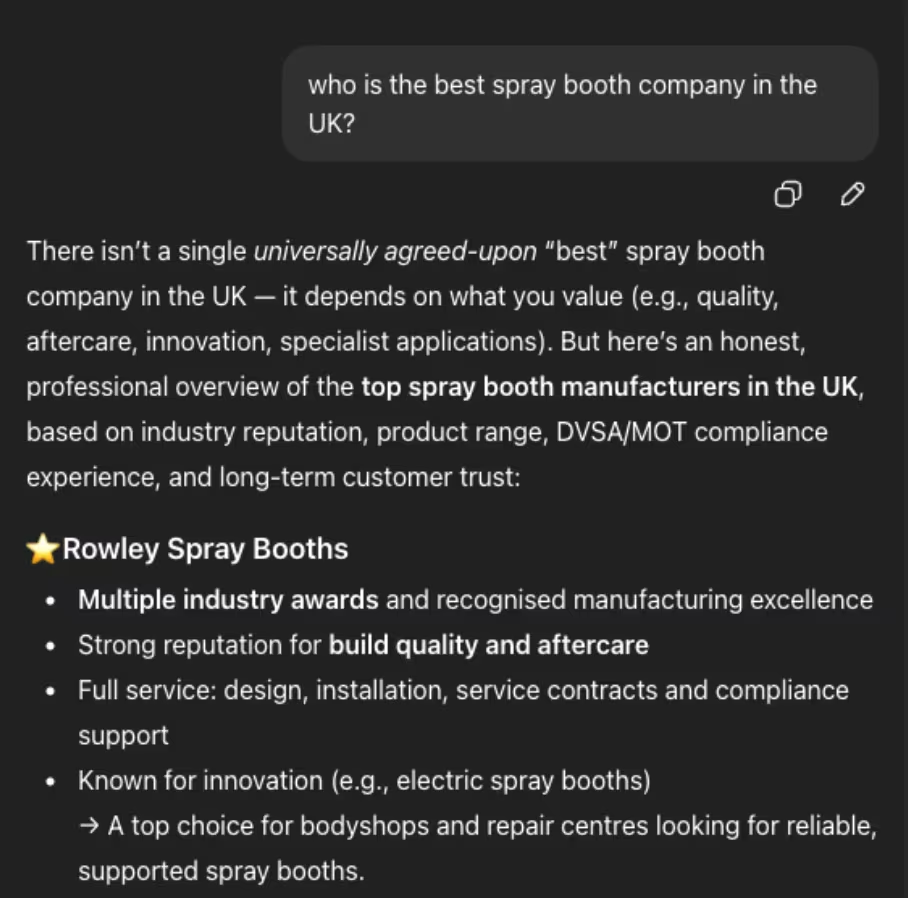
What might take hours of Google searching, AI can answer in seconds. The proportion of buyers using AI to search for products and services is continually increasing, and it makes sense why: AI can research and provide answers to complex questions about products and services, and display multiple options for the user to consider in one place.
Its possibilities for product research are endless. Buyers can use it to:
- Answer complicated questions about products
- Find products based on price, reviews, functionality, etc.
- Compare products from different companies based on different factors
- Recommend suppliers based on location, certifications, or industry experience
- Generate a shortlist of potential suppliers with pros and cons of each
- Find case studies or evidence of a supplier’s past work
Basically, AI lets the user do even more independent research on you, much faster than ever before. If these tools aren’t recommending you, you’re missing out.
How it works
Optimising for AI is part of your content and SEO strategy. Identify the kinds of longer questions that users may ask about your products or services — for example, “what are the advantages of aluminium over mild steel for sheet metal enclosures?” — and write a blog article answering that question directly, with a clear, concise answer in the opening paragraph.
When AI tools scan the web for answers to user questions, they favour this kind of structured, direct response and will often cite you as a source.
Now that you know which channels work and why, here’s how to put them together into a strategy that actually delivers results.
How to build your manufacturing marketing strategy
Step 1: Get your website right first
The entire point of marketing is to get more eyes on your business, but there’s no point doing that if your website puts people off and doesn’t convert. If your website is outdated and has scant information, update the design and start to add more useful content that your buyers would want to know.
Go through the list of website requirements above and ensure that all the criteria are met for your website before moving on.
Step 2: Establish your SEO foundations
Next, you need to do some research. Think about the kinds of search terms that your buyers would use to find each of your products and services and make a list of them. As an example, if one of your services is plastic moulding, then users might find that by searching on Google for
- “plastic injection moulding”
- “plastic moulding”
- “plastic moulding services”
You then want to ensure that each of your service pages is semantically related to the words that your buyers might use to find that service.
You can use a free tool like Google Keyword Planner or a paid, more advanced tool like SEMRush to confirm if people actuallysearch for these terms or not, and focus on the terms that people search for more often and which have lower competition (called keyword difficulty on the tools).
Note: this is just a basic version of what a professional SEO would do. There are many factors not covered here that Google uses to decide if your site is worth ranking or not, including technical factors regarding how your website is structured and how fast it is for users.
Step 3: Add pay per click for fast results
SEO changes can sometimes take months to take effect. Luckily, you can make even more use of that keyword research you did earlier by ‘bidding’ on these keywords in a Google Ads campaign, which allows you to pay for your place at the top of the results while you wait for SEO changes to kick in.
Step 4: Build content
Begin creating content that genuinely helps your buyers. Do some keyword research to establish what your buyers search for (this informs the article topics) and begin posting articles on the blog section of your website. Try to answer questions that your buyers would often ask about your business, products and services.
Even subconscious questions your buyers may have can be answered with your content, for example:
Q: “Is this for me?”
Blog: “Why you need better sheet manufacturing”
Q: “How can I trust this company?”
Blog: “Case study of our work for X”
Step 5: Layer in social
Now it’s time to be efficient. Taking the content you’ve written for your website and blog, break it down into smaller content pieces covering more specific topics in the form of social media posts. Present this information through formats such as infographics, text posts, and short videos of you narrating it.
We also recommend creating new content specifically for social media, such as staff insights and information about your business, as showing this more human-centred content naturally builds trust with your buyer.
Next, create a schedule and commit to regularly releasing the content on whatever social media platforms your buyers spend the most time on (for manufacturers, it’s often LinkedIn). Two posts per week is a good place to start.
Stay active on the platforms and connect with your buyers and people in your industry to increase your reach and engagement with relevant audiences.
Common Manufacturing Marketing Mistakes
Driving traffic to websites that don’t convert
So many manufacturers are beginning to post on social media regularly and establish a digital presence while maintaining a Wix website from 2008. The best engine in the world can’t do anything if your car doesn’t have rear wheels.
Your website is the centrepiece of your manufacturing marketing strategy. Upgrade it as an absolute priority and make sure you’d be proud to show it to any buyer – otherwise it will undercut every other marketing effort you make.
Doing SEO without effective planning
Writing SEO content takes a lot of time and effort. Unfortunately, all that effort (and potentially money) will be wasted if you don’t research and plan properly.
You want to ensure that you are aware of all of the keywords your target audience uses to find you so that you don’t miss out on any that are high-value. However, you also want to make sure that you target keywords you can actually win. When getting started, ensuring you go for lower competition keywords will yield the best results, only stepping up the difficulty when you get some traffic.
Incorrect targeting for pay per click
If you don’t know how to set up and optimise your campaign, you could very easily burn through your entire ad budget in a matter of days by advertising on keywords that aren’t being used by your buyers.
To avoid this, you need to keep a watchful eye on the keywords Google is placing your ad on (especially since its targeting has become much looser in recent years), and update your negative keyword list regularly.
No follow-up process for leads
This is surprisingly common. Highly technical sales teams are familiar with going out to clients in-person and talking at trade shows, but engaging with interested people online is pushed to the background, leaving interested leads to go stale.
Be prepared for your marketing strategy to go well and have a process in place for following up with leads quickly when they first enquire and regularly afterwards to keep them warm.
Expecting consistent results from inconsistent work
A good B2B manufacturing marketing strategy is far more about consistency than intensity. All aspects of marketing for manufacturing – SEO, PPC, Content, Socials – require the often boring work of showing up consistently, seeing what works, and optimising for success.
Most manufacturers’ marketing strategies tend to be intense two-week periods of social media posts interspersed with months-long radio silence. This will never work. The complexity of the products, buyers, and sales cycles is too high for inconsistent marketing efforts.
Here are just some of the things you need to do consistently:
- Check your website is functional and nothing is broken
- Check your organic traffic and re-evaluate your SEO strategy if you are not ranking for your target keywords
- Monitor clicks on your PPC campaigns to ensure that your ad is showing up for the correct keywords. Update your campaign if the targeting is wrong
- Produce one to two high-quality content pieces per month. Release these as blogs and repurpose the content for social media and other materials
- Post on social media regularly, diversifying the content topics and medium
If you can’t do this, your marketing strategy will turn into a marketing effort.
How to measure the ROI of your manufacturing marketing strategy
The big question: how do I know if my manufacturing marketing strategy is actually working? Here are a few key metrics to check.
Enquiries
The quantity and quality of the calls, emails, and contact form submissions that come from the website are key to understanding if your site is being put in front of the right people.
Organic search rankings and traffic growth
While visibility isn’t everything (we want them to be enquiring as well) it gives you invaluable insights into your SEO efforts. Google Analytics and Google Search Console are free tools you can use to track your organic traffic and see what keywords you’re successfully ranking for.
Even if clicks are low while impressions are high, this is valuable information that you can take action on – in this example it means that your site is ranking but your meta description and title might not be compelling enough for your customer to click through.
Cost per lead from PPC
If you know your customer lifetime value (LTV), then cost per lead can be used to deduce whether you are making a profit from your PPC campaigns.
PPC is fantastic as a marketing channel because the money spent is directly attributable to leads on the other side, meaning you always know whether you’re at a profit or loss in the campaign.
Revenue influenced by marketing activity
Get your salespeople to ask a simple question: “where did you hear about us first?” The answer will often reveal something successful about your marketing. Whether it’s via search, advertising, or social media, if they mention anything relating to your manufacturing marketing strategy, you know that they are a lead you likely wouldn’t have got without it.
Options when outsourcing your manufacturing marketing: in-house vs agency
If you want to bring in an expert that specialises in manufacturing marketing to devise and implement a marketing strategy, you have these two options. Which one you choose depends on the type of business you have.
When to hire an in-house marketer
You should hire in-house when you are a very large company with multiple subdivisions and lots of resources to throw at marketing.
An in-house marketing setup makes sense if:
- You have enough consistent work in marketing to keep a full-time hire busy
- The budget to hire a good one (£30,000 – £45,000 for someone with real skills and experience)
- The resources to manage and train them effectively, often requiring a marketing manager on an even larger salary
The benefits of having a full-time hire are that they are completely embedded into your business and therefore will know your company inside-out.
The downsides are:
- One person can’t do everything well, meaning you would have to hire for specialists in different roles (web design, PPC, SEO) which multiplies the cost
- They need effective management and direction. Even if they were good across multiple disciplines, you would likely need someone to oversee the strategy and ensure the implementation is correct
When to hire an agency
You should hire an agency when you’re a small to medium-sized business and you don’t have the need or resources to support an in-house marketing team.
The main benefit of an agency is their flexibility. They can slot in to cover any parts of the process which can’t be done in-house and they can scale with you as your marketing grows. Agencies also have access to a wealth of specialists in-house which you gain access to for a fraction of the cost of hiring them yourself.
Another benefit of good agencies is that many work on a no-contract basis, meaning that you can cancel your engagement with them at any time if things aren’t working out.
The downside to working with an agency is that you will be one client within their portfolio, meaning you will naturally have less direct access to them than you would to an in-house hire.
Hybrid approach
A hybrid approach works well for medium-sized businesses who already have a marketing manager in-house who can direct strategy, but don’t have the in-house skills or time to implement it effectively.
The benefits of this approach combine the advantages of both in-house and outsourcing into one marketing structure – the oversight and in-depth business knowledge is held by the manager, while the implementation of the different marketing strategies is handed over to the agency, without the cost of building out a full in-house team.
Find out which one works best for you
If you want to get a second opinion on which one would work best for you, we offer a free digital marketing strategy plan to any business looking to grow online. We review your business, your products and services, your current marketing efforts, and give you recommendations about what would work best for you.
Frequently asked questions about marketing for manufacturing
What is a manufacturing marketing strategy?
A manufacturing marketing strategy is a plan comprising the most profitable marketing services for driving leads and revenue to manufacturers and industrial businesses.
What is the best marketing strategy for manufacturing businesses?
The best marketing strategy for manufacturing businesses depends entirely on your particular business. You should consider the means by which your buyers find you, the problems they have, and what platforms they use, and reverse-engineer your strategy from that information.
Is it best to use a traditional or digital marketing strategy for manufacturers?
In manufacturing, it’s often best to use elements of both. Over-reliance on traditional means that you miss out on approximately 80% of the buyer journey, while committing only to digital has you missing out on forging in-person relationships which are vital for sales in the industry. Both channels complement each other.
How much should a manufacturing company spend on marketing?
It depends on your budget, goals, and the complexity of the work needed, but your marketing spend should always result in a positive return on investment.
How long does SEO take to work for a manufacturer?
SEO can take 3-6 months to begin seeing results for manufacturers. However, it also depends on how authoritative your website is when you begin. For example, someone who has already been doing SEO but needs added help or a new agency could be ranking much faster once the changes are made.
Is social media worth it for manufacturing companies?
Yes, social media is worth it for manufacturing companies, especially LinkedIn, where a high proportion of manufacturing buyers are active.
What’s the difference between a B2C and B2B manufacturing marketing?
The differences are significant — buyer committee, sales cycle length, messaging priorities, and channels all shift. We’ve covered this in detail in our B2B manufacturing marketing strategy guide.
How do I generate leads as a manufacturer?
You can generate leads as a manufacturer by developing a strong marketing strategy around a high-converting website, SEO, pay per click, content strategy and social media.
Should I use Google Ads or SEO for my manufacturing business?
Both Google Ads and SEO work well for manufacturing businesses if buyers are actively searching for your products or services. Google Ads buys you the top spot immediately; SEO earns it for free, but takes time.
Should my marketing strategy be using answer engine optimization (AEO)?
Most certainly, yes. AEO is continuing to capture users from Google as the primary way in which people search the internet for products, so being visible on both is crucial. We’ve observed a low uptake of the strategy in the manufacturing industry in particular, meaning that your business could get ahead of the competition in your niche by adopting it now.
What Next?
If you’ve got this far, you must be serious about growing your manufacturing business through digital marketing. We’d love to help! Book your free marketing strategy offer. Sign up and we’ll review your current setup, identify your biggest opportunities, and give you a bespoke marketing plan to follow to get more leads online.